
Contribution and elaboration by Samar Boulos- AASL President
Another structure that had its impact on social work in Lebanon is the Association of Social Workers in Lebanon AASL, which was founded in 1954 by a group of social workers graduates from the Lebanese School of Social Work, namely Wadad Abou Nader, Olga Sara, Marie Rizk, Milia Jabr, Georgette Abi Sarmra, and Salma Boueiz.
It is a non-governmental organization licensed under Decree No. 2511, number 884.
Since its establishment, many people have successively held the presidency of the association: Milia Jabre, Antoinette Kazan, Rachel Tawileh Sfeir, Solange Sakr, Nadia Taoutel, Jean-Claude Gabriel, May Hazaz, Carmel Wakim, Rita Chouchani, Carla Ghawi, and later May Moufarrege. Samar Boulos is the current president.
The association consists of a general assembly that includes social workers who hold a degree in social work from the Lebanese School of Social Work at Saint Joseph University, and an executive body consisting of nine members elected by the general assembly for a three-year term.
One of the key achievements of the association upon its founding was the publication of a quarterly journal titled “Les Réalités Sociales,” with its first issue published in 1962 under the leadership of Mrs. Milia Jabre, who described the journal as “a tool for social thought.” The association also organized seminars between 1976 and 1977 under the title: “What kind of social service for a changing society?”
Among the important achievements, the association prepared a comprehensive document concerning social centers and development, which included the criteria for establishing these centers, along with a comprehensive list of social and medical institutions concerned with children during that period.
The association also held the first national conference for social workers in Lebanon on July 12 and 13, under the title: “Current and Future Social Work.”
L’Association des Assistants Sociaux au Liban (AASL) 1954:: Its Objectives
A Lebanese non-governmental organization founded in 1954 by a group of social workers and is a member of the International Federation of Social Workers.
The association was established to strengthen the role of social workers as key drivers in the process of national change through:
• Enhancing the social work profession by involving various stakeholders.
• Building a network of relationships with national and regional actors to plan social interventions.
• Advocating for and promoting respect for the social work code of ethics.
• Activating the professional activity of social workers in Lebanon by fostering exchanges among professionals to share experiences and best practices.
L’Association des Assistants Sociaux au Liban (AASL) 1954:: Its Activities (Last Ten Years)
• Conferences and Workshops: On various social issues, targeting social workers and highlighting the vital role social workers play in intervening in social issues.
• Building Partnerships: Establishing partnerships with non-governmental organizations to provide resources and support for social workers, particularly in the area of capacity building (English language). The association also signed a memorandum of understanding with a private research center to support the involvement of social workers as technicians in field surveys and technical consultations.
• Needs Assessment and Awareness Raising: Organizing three needs assessment activities (rapid survey and consultative meetings) to assess the needs of social workers during the recurring crises in Lebanon through documenting and publishing them through participation in local and regional conferences on the state of social work during crises.
• Coordination and Networking: Organizing formal and informal meetings between social workers to enhance communication among them and exchange experiences.
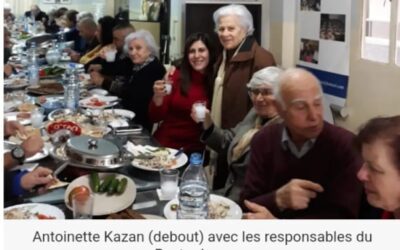
• Recreational Activities: Organizing dinners and joint outings.
• Coordination Between Agencies: Creating networks that connect social workers with regional and national organizations and enhance collaboration on community projects and interventions.
• Exchange: Establishing working groups or coalitions of social work organizations to address issues with a unified front, pooling expertise and resources.
• Participation in Social Media Interviews (Podcast): Speaking about the role of the association and social workers in various issues.
L’Association des Assistants Sociaux au Liban (AASL) 1954: Future Vision
• Developing a Mentorship Program: To support junior social workers with senior experts in the field, aiming to enhance professional skills, encourage their professional development, and provide psychological and knowledge support to face practical challenges. The association launched the program in 2029, but it stopped due to the COVID-19 crisis and subsequent ongoing crises.
• Developing Psychosocial Support Programs for Social Workers: Collaborating with a group of psychologists to create psychosocial support programs for social workers to help them cope with the psychological and professional pressures resulting from working with vulnerable groups and communities affected by crises.
• Enhancing Social Media Presence: Strengthening the association’s presence on social media platforms by publishing awareness-raising and educational content that contributes to increasing awareness about the social work profession and the importance of the role of social workers in society. Additionally, using these platforms to communicate with the general public and participate in discussions on emerging social issues.
• Enhancing Research and Social Studies: Encouraging scientific research and assessing needs in social work by establishing partnerships with universities and local and international research institutions, with the aim of developing more effective social intervention policies and strategies.